
Search This Supplers Products:Magnesium OxideCaustic Calcined MagnesiteDead Burnt MagnesiteFused MagnesiteMgSO4Magnesium Sulphate
Magnesium Sulphate in Animal Feed: Enhancing Nutrition & Health
time2025/12/12
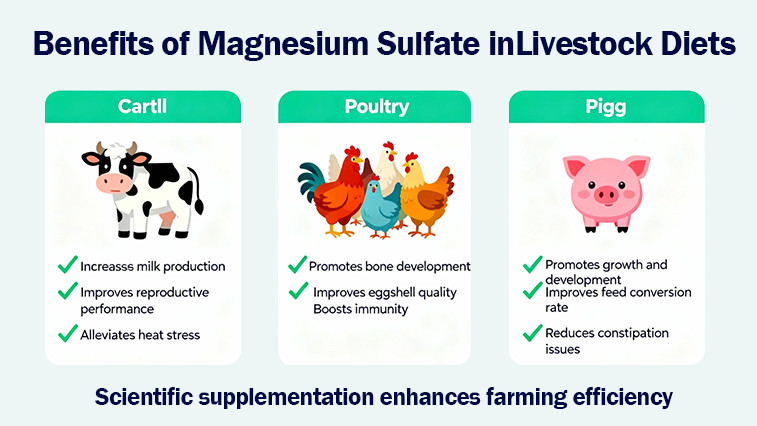
- The role of Magnesium Sulphate as a critical feed additive in modern animal feed formulations is gaining renewed focus. Essential for preventing magnesium deficiency.
Magnesium Sulphate in Animal Feed: Enhancing Nutrition & Health
The critical role of magnesium sulphate as a feed additive in modern animal feed formulations is receiving renewed attention. It is essential for preventing magnesium deficiency and is a cornerstone of effective livestock nutrition strategies. Deficiencies can lead to reduced feed efficiency, health issues such as grass tetany in cattle and lower overall productivity, so proper supplementation is a key economic consideration for farmers.
Incorporating feed-grade magnesium sulphate into animal feed ensures that they receive the necessary magnesium for numerous physiological functions, including enzyme activation, nerve function and skeletal development. Compared to some other magnesium sources, its high bioavailability makes it a preferred choice for nutritionists formulating balanced diets for poultry, swine, ruminants and aquaculture species.
The trend towards precision livestock farming is increasing demand for consistent, high-quality mineral supplements. This pushes feed-grade producers to adhere to stringent specifications regarding purity, heavy metal content and particle size. A reliable supply of standardised magnesium sulphate is essential for feed mills to produce consistent, high-performance feed products that meet the exacting requirements of large-scale farming operations.
As the global demand for animal protein continues to rise, optimising animal health and growth efficiency becomes paramount. Strategically using essential minerals such as magnesium, supplied through reliable compounds like magnesium sulphate, will remain fundamental to sustainable and profitable animal agriculture.
The CNMGO Group has a deep understanding of the diverse needs of its customers. Our magnesium sulphate products, including high-quality feed-grade magnesium oxide (MgO), are produced using a rigorous quality control system. This ensures that every batch meets the highest standards of purity, solubility and safety, helping our customers to maximise their production potential and economic benefits.
if you are interested in our products, you can contact us directly through the mailbox, if necessary, you can also use WhatsApp for quick consultation.
————————————————————————————————————————————————————————————————
[Platform release disclaimer]
This platform part of the article picture source or adapted from the Internet, the main purpose is to share information, so that more people get the information they need, the copyright belongs to the original author, such as infringement of your rights and interests or copyrights, please let us know in time, we will be deleted within 24 hours!